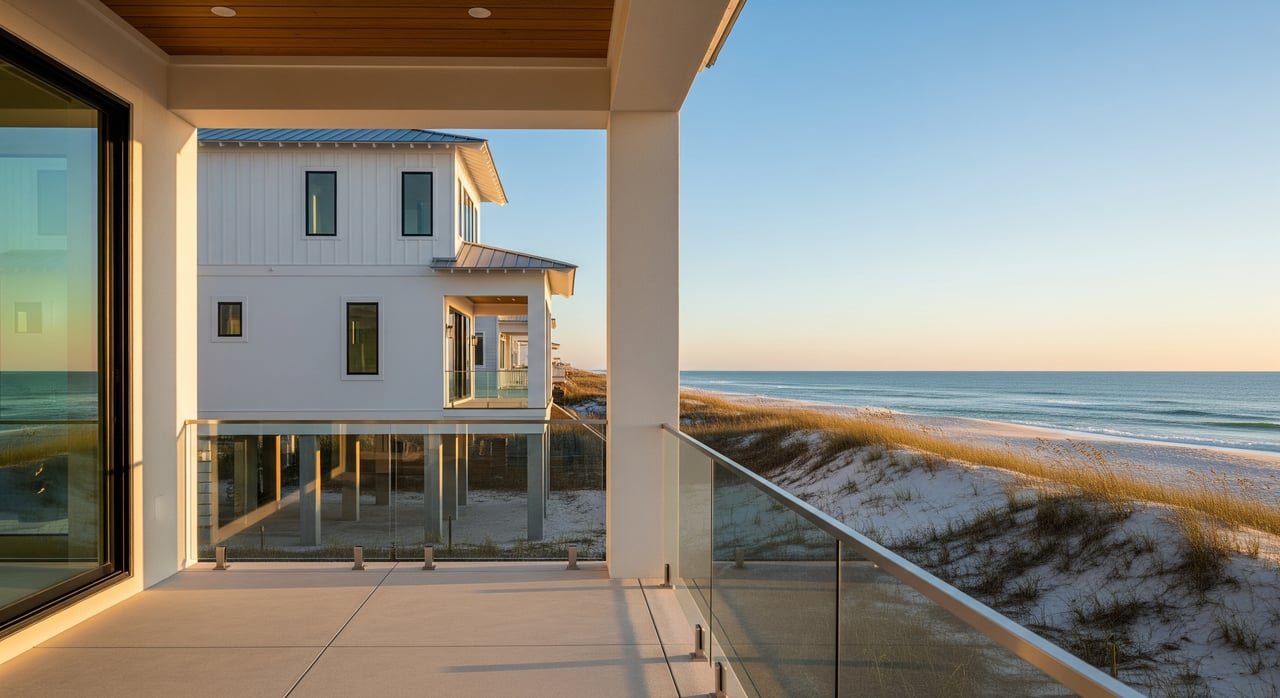
Thinking about buying in Crystal Beach but torn between a shiny new build and a well-loved resale? You are not alone. The decision affects your total cost, your timeline to move in, your insurance options, and even how you use the property for personal enjoyment or short-term rentals. This guide lays out what matters most in Crystal Beach so you can move forward with clarity and confidence. Let’s dive in.
New build: what you gain
A new-construction home gives you current building code standards, fresh systems, and the chance to select finishes that suit your taste. In coastal Okaloosa County, newer builds often include wind-mitigation features and flood-aware designs that may reduce risk. You also avoid the early-cycle maintenance that older homes can require.
You still need to inspect. Even with new construction, you should order independent inspections at key stages, document a punch list, and confirm completion before final disbursement and closing. Builders may offer limited warranties, but coverage varies, so review the terms and process for making claims.
Best if you want:
- Modern layouts and energy efficiency with minimal immediate maintenance.
- A chance to personalize finishes and fixtures.
- Potential insurance credits from newer wind or flood-resilience features, depending on the home design.
Resale: what you gain
A resale can offer immediate occupancy, mature landscaping, window treatments, and appliances included in the sale. You can review seller disclosures, permit history, and, in some cases, utility usage to understand typical operating costs. Closings can be quicker than a build-to-suit timeline.
The trade-off is condition variance. Older roofs, HVAC systems, or past storm exposure can mean repairs or upgrades. Plan for a full home inspection and targeted specialists for items like the roof, pest, mold, HVAC, pool or spa, and septic if present.
Best if you want:
- Faster move-in and a known neighborhood context.
- Established lots and finishes without upgrade decisions.
- A price that reflects existing features and condition rather than a builder options menu.
Total cost and financing
Price vs total cost
With new builds, the base price is only a starting point. Options, site work, landscaping, and impact or hookup fees can push the total higher. You should also factor longer pre-occupancy carrying costs if you are waiting months for completion.
With resales, the asking price often includes mature landscaping, installed window treatments, and appliances. You may spend on renovations or immediate repairs based on inspections. The key is to budget for both the known inclusions and the likely punch list after closing.
Financing paths
If a new home is already complete and has a Certificate of Occupancy, you can pursue a standard mortgage. If you contract to build, you may need a construction-to-permanent loan with draws and an interest-only period during construction. Appraisals must support value, and unique or speculative builds can invite more conservative lender views. Builders sometimes offer incentives like rate buy-downs or closing credits that affect your net cost.
For resales, standard mortgages are common, but appraisals still matter. If you plan significant renovations, talk to your lender early about options and timing.
Timeline and carrying costs
New builds can take months or more, with potential delays from permitting, weather, labor, or materials. During that time, plan for temporary housing or overlapping mortgage and insurance costs. Resales typically close faster, though inspections, repairs, and financing contingencies can still extend the timeline.
Flood, wind, and insurance in Crystal Beach
Crystal Beach sits in a coastal risk zone where flood and wind exposure are real considerations. Mortgage lenders often require flood insurance if the property is in a Special Flood Hazard Area. Even if it is not, many owners choose coverage due to coastal risk. An elevation certificate helps you obtain accurate flood insurance quotes and is commonly part of the documentation for newer builds.
Wind and hurricane insurance is a major factor in your annual cost. Premiums depend on coverage selections and the property’s features, such as roof type, opening protection, and other mitigation. New builds can incorporate impact-rated windows, elevated foundations, and sealed building envelopes that may reduce risk and potentially improve insurability. That said, new homes are not always cheaper to insure; location, elevation, and coverage choices still drive the final premium. Some owners use state-backed options when private-market capacity is limited.
Permits, code, and coastal rules
Local permits and CO
New construction requires permits and inspections through local building departments, plus a final Certificate of Occupancy before closing. Always confirm permit status and CO issuance. For resales, review past permit history for major work and request documentation for completed repairs or upgrades.
Coastal construction and dunes
Beachfront or near-dune properties can fall under coastal construction control lines and shoreline protection rules. Additional environmental or coastal permits may apply for seawalls, dune work, or any activity below the mean high-water line. These rules can add time and cost for new builds and limit what you can change on a resale.
Short-term rental and zoning
If you plan to rent short term, verify zoning, licensing, transient rental taxes, and any HOA covenants. In coastal tourist markets, short-term rental rules can affect both income potential and resale value. Never assume a property allows STR use without checking the local ordinance and association documents.
Appraisals and eventual resale value
New construction often carries a near-term “new premium.” Your long-term resale value will still depend on comparable sales, buyer demand, and how many new builds compete nearby. In coastal markets, seasonality and tourism cycles can influence values more than inland areas.
For both new and resale homes, the fundamentals matter most. Proximity to the beach or access points, water views, lot elevation, the quality of construction, and diligent maintenance all contribute to resale value. HOA covenants and neighborhood presentation can also influence buyer expectations.
Practical checklists
If you are considering a new build
- Verify builder licensing and reputation, including relevant state records.
- Review the builder contract, change-order process, allowances, and escrow procedures.
- Confirm issued permits, passed inspections, and anticipated CO date.
- Obtain detailed warranty terms and claim procedures.
- Secure an elevation certificate, survey, and drainage plan.
- Get insurance quotes for property, wind, and flood based on the planned structure.
- Confirm HOA covenants, fees, architectural restrictions, and short-term rental rules.
- Order independent inspections at pre-drywall and final; complete a punch list before final payment.
If you are considering a resale
- Review seller disclosures, permit history, and any recent inspections.
- Order a full home inspection plus specialists for roof, HVAC, pest/termite, mold, pool/spa, or septic if applicable.
- Confirm proof of repairs and that permits were closed when required.
- Obtain insurance quotes and ask about prior weather-related claims.
- Check current flood zones and order an elevation certificate if needed.
If you are preparing to sell
- Organize documentation: CO, permits, warranties, HOA documents, manuals, and maintenance records.
- For recent new builds, be ready to discuss warranty transfer, builder-deferred items, and upgrades beyond the base package.
- For resales, consider a pre-listing inspection to address issues before going live.
How we help in Crystal Beach
You want a property that fits both your lifestyle and your numbers. Our boutique team pairs coastal expertise with hands-on guidance to simplify this choice. We help you compare new-build options with strong wind and flood resilience against resales that may offer faster occupancy, established settings, and known operating histories.
If you are exploring short-term rental potential, we focus on zoning, HOA rules, and data-backed rental positioning to support confident decisions. If you prioritize peace of mind, we help you navigate inspections, elevation certificates, and insurance quotes so there are fewer surprises after closing.
Ready to weigh your options in Crystal Beach with local, boutique-level support? Connect with Katie Atwater and Mike Henderson to align your next move with your goals.
FAQs
Is new construction always cheaper to insure in Crystal Beach?
- Not always. Newer mitigation features can help, but premiums depend on location, elevation, and coverage choices. Always obtain local quotes for the exact property.
Can I negotiate with a builder on a Crystal Beach new build?
- Often yes. You may negotiate price, upgrades, or closing and financing incentives, depending on market conditions and builder strategy.
Should I get inspections on a brand-new home?
- Yes. Order independent inspections at key stages, create a punch list, and verify completion before final disbursement and closing.
Are FEMA flood zone maps fixed for Crystal Beach?
- No. Flood designations can change. Confirm current maps for the parcel you plan to buy and consider an elevation certificate for accurate insurance pricing.
How do short-term rental rules affect property value?
- If STR use is allowed and in demand, income potential can support value. Strict limits can reduce investor interest. Verify zoning and HOA rules before you buy.