If you want a home that gives you front-row access to Destin’s boating lifestyle and the possibility of short-term rental income, Destin Harbor stands out fast. It offers a rare mix of walkable waterfront activity, marina energy, and zoning that can support rental flexibility in the right property. If you are weighing lifestyle use against income potential, this is where details matter most. Let’s dive in.
Why Destin Harbor draws buyers
Destin Harbor is its own waterfront submarket, not just another address near the beach. The Harbor Boardwalk runs nearly a quarter-mile along the water and connects visitors with charter boats, restaurants, and water-based activities. That creates a very specific owner and guest experience built around convenience, views, and harbor access.
The area also benefits from ongoing public investment. The Harbor Community Redevelopment Area covers about 397 acres and continues to see projects tied to parking management and utility undergrounding. For you as a buyer, that helps frame the harbor as an actively managed district with long-term relevance.
What makes harbor ownership different
A Destin Harbor home can offer more than waterfront scenery. In the right setup, you may also gain rental appeal from proximity to the boardwalk, boating activity, and a compact district where dining and excursions are close at hand. That combination is unusual, and it is one reason harbor properties often attract both second-home buyers and investors.
Still, harbor ownership is not just about the view. You need to understand zoning, rental rules, parking, and any dock or slip rights before you count on the property performing the way you expect.
Short-term rental potential starts with zoning
One of the most important facts for buyers is that Destin’s zoning map includes North Harbor Mixed Use and South Harbor Mixed Use in the harbor area. According to the city’s short-term rental FAQ, short-term rentals are generally allowed in both districts. That makes the harbor especially relevant if you want personal use with rental upside in the same property.
Even so, “generally allowed” does not mean every property is plug-and-play. Property type, land use, and operating requirements still need to be verified before closing. This is where careful due diligence protects both your lifestyle plans and your underwriting.
Know the city’s short-term rental rules
In Destin, the permitting path depends heavily on whether you are buying a single-family home, condo, or another residential unit. The city defines a short-term rental that requires registration as a single-family dwelling unit occupied for one day to no more than six months. The city also says that registration must be renewed annually.
For a registered short-term rental, the city requires a City of Destin business tax receipt, an Okaloosa County business tax receipt, and compliance with occupancy and operating rules. Those are not minor details. They affect your setup timeline, your annual compliance tasks, and your operating costs.
Occupancy rules affect rental projections
Destin’s occupancy rule matters if you are estimating revenue. The city limits overnight occupancy to 2 adults per bedroom plus 4 additional persons per property, with an absolute cap of 24 overnight guests. If you are comparing homes, bedroom count and layout can directly influence legal occupancy and guest appeal.
The city also requires a local responsible party who can respond 24/7 and reach the property within one hour. Posted signage must list the management company, emergency contact, occupancy limit, and available parking spaces. For you, that means management logistics should be part of the buying decision from day one.
Condos and homes follow different paths
Condos and apartments are treated differently from single-family homes. The city’s registration guide says condos and apartments do not have to be registered as short-term rentals with the City of Destin, but they still need a Destin business tax receipt and may require a Change of Use or Conditional Use review.
That distinction is easy to miss, and it is one of the biggest reasons buyers should avoid assumptions. A condo with strong harbor appeal may still require separate land-use review before short-term rental use is fully in line with local rules.
Taxes and state licensing still matter
If you plan to generate short-term rental income, local and state requirements continue beyond the city. Okaloosa County says Tourist Development Tax applies to short-term rental income for stays of six months or less, must be filed monthly, and is currently 6%. That should be built into your operating model from the start.
At the state level, Florida DBPR regulates transient public lodging. Its guide says a whole-unit rental generally falls under transient licensing if it is rented more than three times in a calendar year for periods of less than 30 days, or if it is advertised as regularly rented on that basis. Before you rely on projected income, make sure your compliance roadmap is clear.
Dock and slip rights need proof
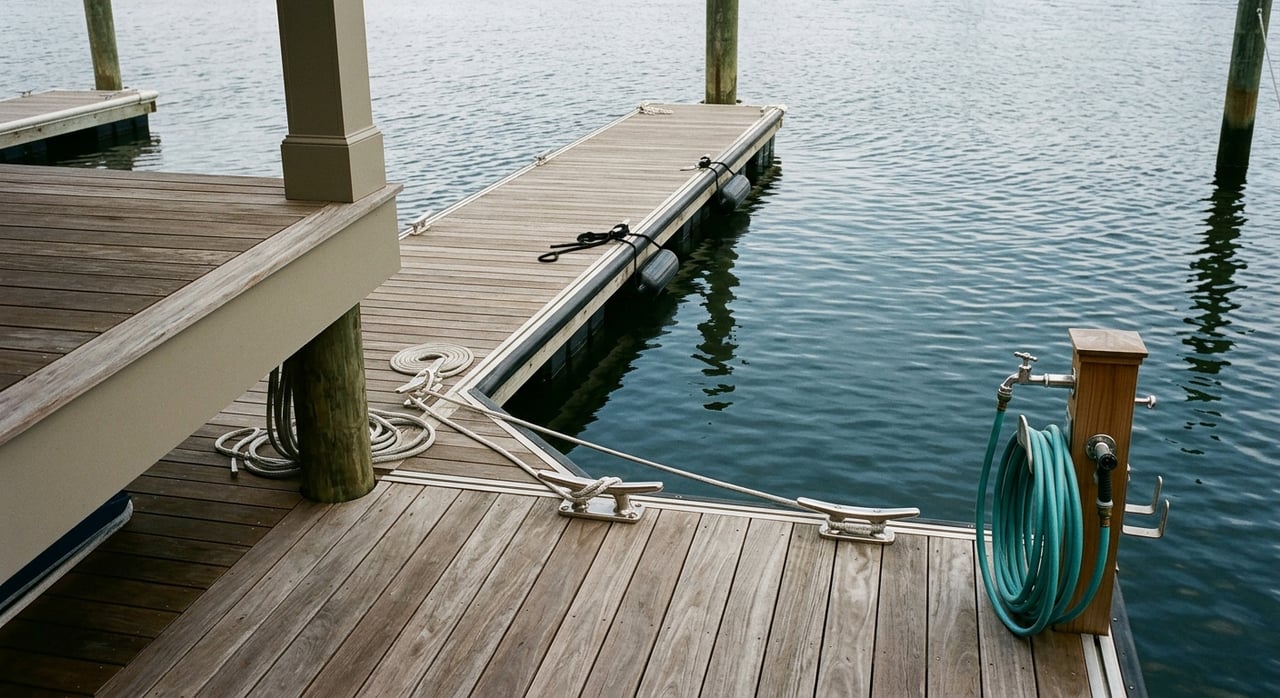
In Destin Harbor, boat access can be a major part of value, but it should never be assumed from the address or the photos. A dock shown in marketing materials may be deeded, leased, shared, transient, or controlled by an association. Those differences can change how you use the property and how future guests experience it.
The city updates its harbor transient boat slip map as conditions change. The city has also noted ongoing information gathering around transient slips in the harbor, and Captain Royal Melvin Heritage Park includes three transient slips where commercial activity is not allowed. In practice, you should verify exactly what transfers with the sale and what does not.
Waterfront improvements require permits
If you are thinking about improving a dock, seawall, boardwalk, or shoreline feature, the city is clear that permits are required. That includes marine docks and piers, bulkheads, seawalls, boardwalks, and other waterfront modifications. The Building Division also warns that construction without a permit is not legal.
The city advises owners to contact Community Development first for waterfront modifications. There is also a Harbor & Waterways Board that monitors the harbor, reviews future growth, and reviews projects proposed for harbor and waterway locations. For buyers, that means waterfront ownership comes with an extra layer of review and planning.
Parking can make or break guest experience
Parking is one of the most practical issues in the harbor, especially if you are buying with rental use in mind. The city says public lots in the Harbor District are pay-to-park, first come, first served, and overnight parking is prohibited. Harbor parking is generally within a 5- to 10-minute walk to the Harbor Boardwalk.
For visitors and non-residents, the current harbor parking rate is $15 for all-day parking. That may not sound dramatic, but guests notice arrival friction quickly. A property with a clear, easy parking plan often has a simpler path to better reviews and repeat use.
How the harbor fits the Destin market
Destin sits at a premium relative to the broader county. March 2026 data from Redfin shows a median sale price of about $618,000 for Destin, compared with about $380,000 for Okaloosa County. Florida Realtors also reported a March 2026 median single-family sale price of $485,230 for the Crestview-Fort Walton Beach-Destin MSA and $420,000 statewide for Florida single-family homes.
The data sources are not perfectly identical in method, but the direction is consistent. Destin trends above the broader county and above the statewide single-family median. Within that context, harbor-front and dock-enabled properties often sit near the upper end because usable waterfront supply is limited and the amenity mix is hard to duplicate.
What smart buyers verify before closing
If you are buying a harbor home for both enjoyment and income potential, the best process is disciplined and specific. A beautiful waterfront property can still disappoint if the rental path, boat access, or carrying costs are not what you expected.
Before you move forward, verify these items:
- Zoning and whether short-term rentals are generally allowed for that location
- Whether the property type triggers registration, Change of Use, or Conditional Use review
- City and county business tax receipt requirements
- Occupancy limits and management obligations
- Tourist Development Tax handling and monthly filing requirements
- Whether state transient lodging licensing applies
- Dock, slip, and shoreline rights, including whether they are deeded, leased, shared, transient, or association-controlled
- Parking arrangements for owners and guests
- Association documents, if applicable
- Flood insurance exposure and any homestead-related questions that may apply to your ownership plans
Why local harbor knowledge matters
Destin Harbor can be a compelling place to own because it combines lifestyle and economics in one of the most dynamic waterfront settings on the Emerald Coast. But it is also a market where the fine print matters more than usual. Rental rules, parking realities, and boating access all need to line up for a purchase to work the way you want.
That is why a harbor purchase benefits from local, property-level analysis, not broad assumptions. If you want help comparing options, reviewing rental upside, or pressure-testing the details behind a waterfront listing, Katie Atwater and Mike Henderson bring a boutique, data-driven approach built for Destin Harbor buyers.
FAQs
What makes Destin Harbor different from other Destin locations?
- Destin Harbor functions as a distinct waterfront district with marina-oriented amenities, the Harbor Boardwalk, paid public parking, and zoning that can support short-term rental flexibility in the right property.
Are short-term rentals allowed in Destin Harbor?
- In the harbor area, the city says short-term rentals are generally allowed in North Harbor Mixed Use and South Harbor Mixed Use districts, but you should still verify the specific property’s zoning, use path, and requirements before closing.
Do single-family homes and condos follow the same rental rules in Destin?
- No. The city treats single-family homes differently from condos and apartments, and condos may still need a business tax receipt and possible land-use review even if city short-term rental registration is not required.
How does Destin calculate short-term rental occupancy?
- The city limits overnight occupancy to 2 adults per bedroom plus 4 additional persons per property, with a maximum of 24 overnight guests.
What should you verify about a Destin Harbor dock or boat slip?
- You should confirm whether any dock or slip rights are deeded, leased, shared, transient, or controlled by an association, because waterfront access does not automatically transfer just because a property is on the harbor.
Why is parking important for a Destin Harbor rental property?
- Parking affects guest convenience and reviews because harbor public parking is paid, first come first served, and overnight parking is prohibited, so an easy parking plan can add meaningful rental value.