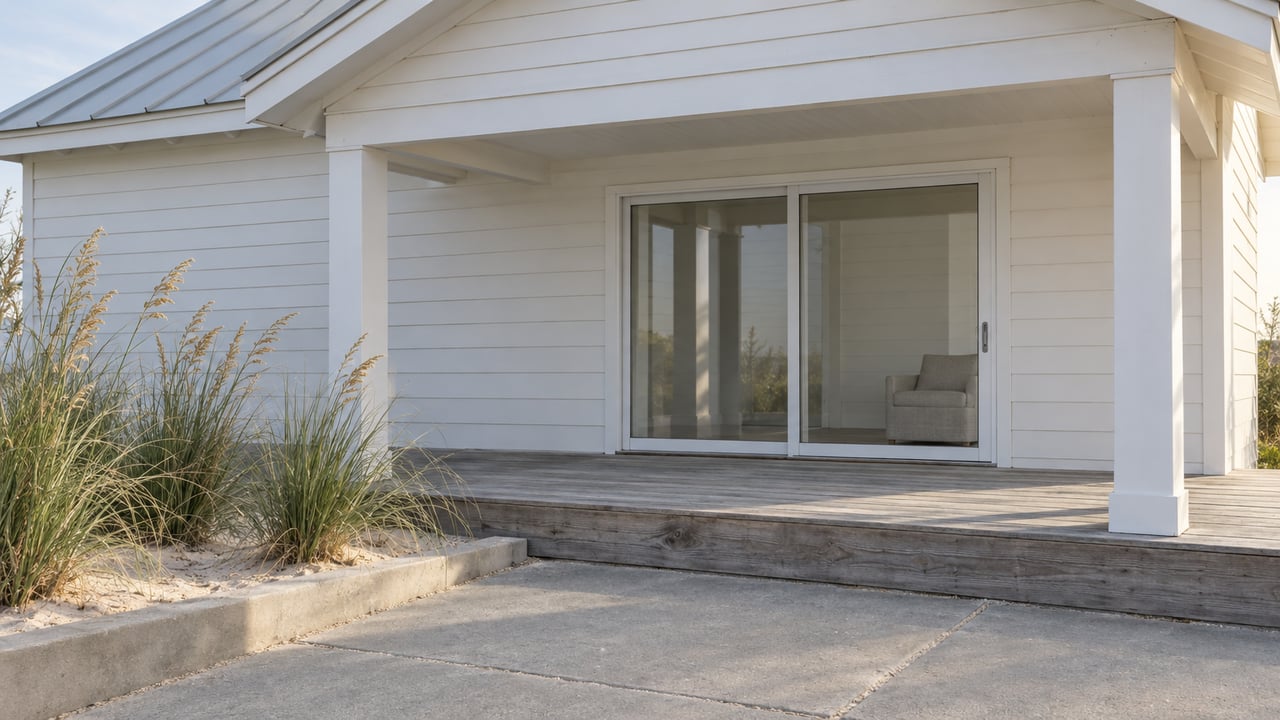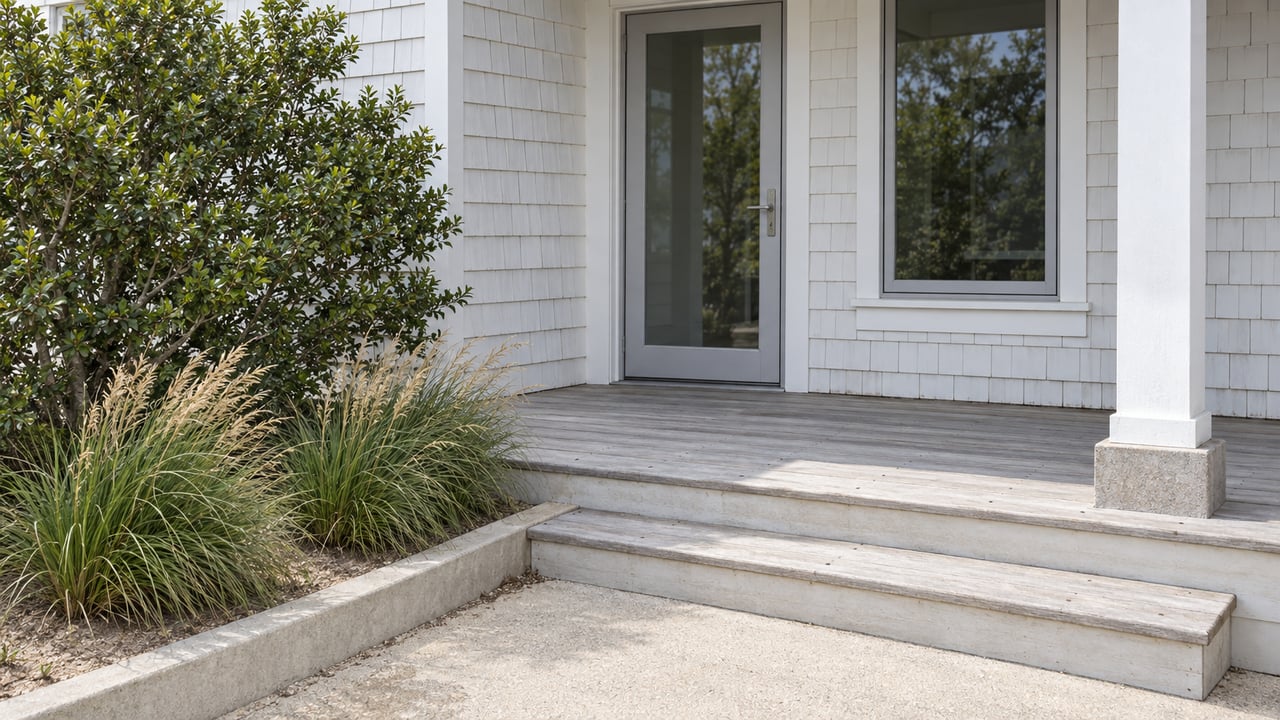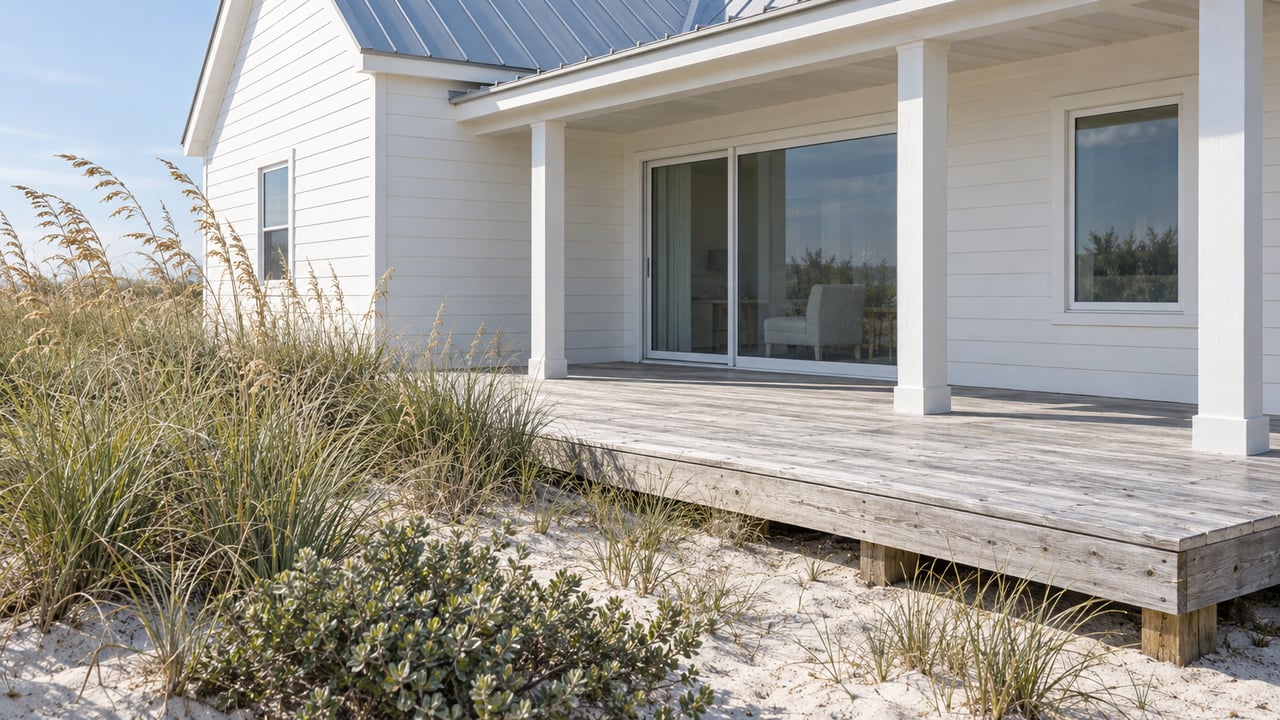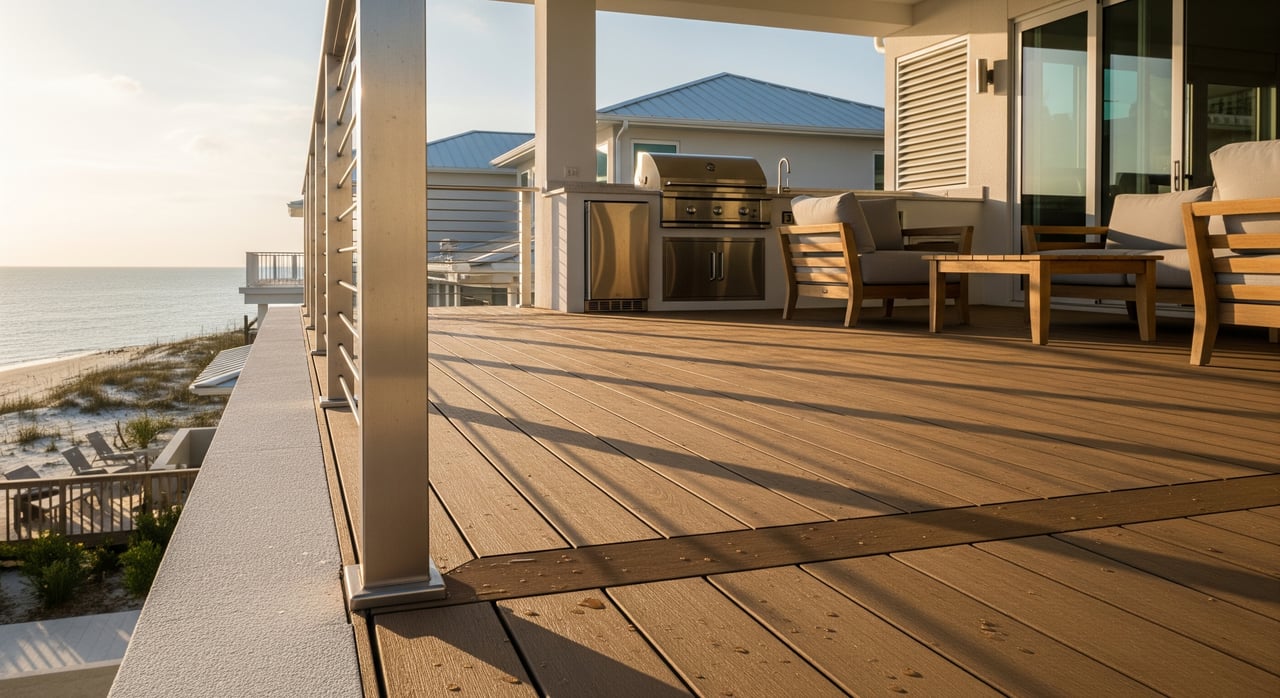
Salt air keeps your Point Washington home beautiful and breezy, but it is tough on finishes. You see it on rusted screws, streaked railings, and faded paint that needs constant touchups. If you are planning a renovation or a pre-list refresh, choosing salt-smart materials can lower maintenance and boost curb appeal for photos and showings. This guide gives you clear specs, checklists, and simple language you can use with your contractor so your 30A West home looks great and lasts longer. Let’s dive in.
Why salt-smart materials matter
Salt-laden air, high humidity, strong sun, and wind-driven rain along 30A speed up corrosion and weathering. Metals pit, coatings fail, and fasteners stain nearby surfaces. Add hurricane events and you have a recipe for frequent repairs if materials are not rated for coastal exposure. The right finishes reduce staining, extend service life, and keep your home market-ready.
Know the code and approvals
Florida uses the Florida Building Code, 8th edition, which sets structural and product requirements. In coastal areas and wind zones, many exterior items must meet stricter standards. Ask for proof of Florida Product Approval or a Miami-Dade Notice of Acceptance for windows, doors, roofing, and certain cladding systems. On product sheets, look for third-party testing like ASTM B117 for salt spray, AAMA 2605 for high-performance metal finishes, and ASTM A153 or A123 for hot-dip galvanizing. Manufacturer warranties should spell out coastal coverage and installation conditions.
Hardware and fasteners that last
Your fastener choices set the tone for long-term performance. Small parts fail first in salt air and can stain decks and siding.
- Choose Type 316 stainless steel for screws, bolts, anchors, and deck hardware. For cut ends, request passivation per ASTM A967.
- Consider duplex stainless like 2205 for anchors in direct spray zones if budget allows.
- For dense hardwood decking, silicon bronze or copper-nickel fasteners help prevent staining.
- If you use galvanized steel, specify hot-dip per ASTM A153 or A123 with heavy coatings. Avoid thin electro-galvanized items.
Spec language you can paste into bids:
- “All exposed fasteners and connector hardware to be Type 316 stainless steel. Fasteners for hardwood decking may be silicon bronze. Passivate stainless fasteners per ASTM A967.”
Decking and rail choices
You want a surface that photographs well, feels good underfoot, and cleans up easily after a storm.
- Capped composite and cellular PVC decking resists rot, salt, and stains with low upkeep. Look for products with published coastal performance.
- Pure PVC boards offer strong stain resistance. Plan for expansion and heat management in design.
- Tropical hardwoods like Ipe and Cumaru are durable and luxurious. They need stainless or bronze fasteners and periodic oiling if you prefer rich color over a natural silver patina.
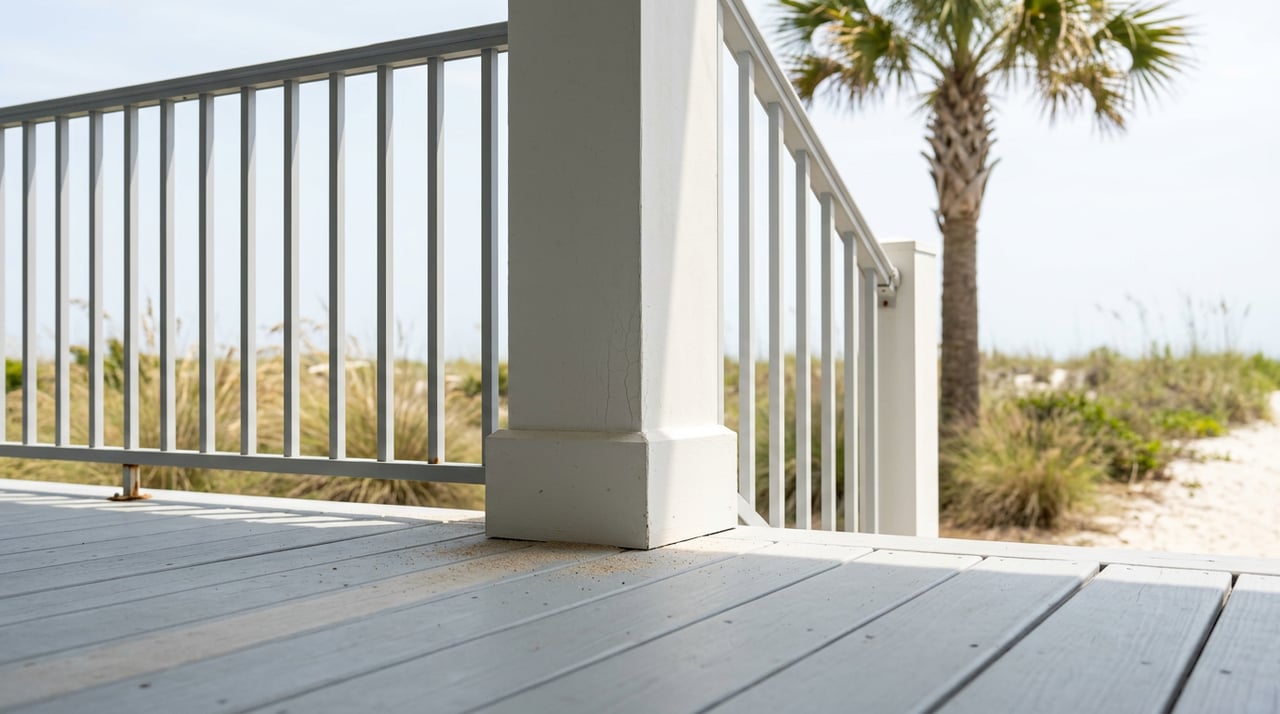
- Railings: Aluminum with marine-grade powder coat or PVDF finish is a low-maintenance favorite. Use stainless attachment hardware. Glass panels work well when detailed for drainage so salt does not pool at the base.
Tip: Limit exposed fasteners. Hidden clip systems reduce staining and keep lines clean in photos.
Roofing that resists coastal wear
A roof in Point Washington faces sun, wind, and salt. Materials and coatings matter.
- Metal roofing: Pre-finished aluminum or Galvalume with a PVDF topcoat meeting AAMA 2605 gives strong coastal durability. Lighter colors reflect heat and hide salt deposits.
- Stainless steel roofing is very corrosion-resistant but uncommon due to cost.
- Asphalt shingles: Use high-quality fiberglass-mat shingles with algae resistance and higher wind ratings. Underlayments and flashings should be rated for coastal use.
- Flashings and gutters: Choose 316 stainless or coated aluminum. Avoid standard galvanized gutters near salt spray. Maintain clear drainage to prevent salt buildup.
Siding and trim that hold up
Cladding choices affect both upkeep and listing photos.
- Fiber cement siding, properly primed and painted, resists rot and salt and looks crisp with the right paint system.
- High-density composite cladding is another low-maintenance option that photographs cleanly.
- Wood siding works when you select durable species and plan for finishing cycles. Always use stainless fasteners.
- Stucco and EIFS can perform well when detailed for drainage with quality elastomeric or acrylic coatings that include mildewcide.
Windows, doors, and exterior hardware
Openings take a beating in coastal weather and must meet Florida requirements.
- Require Florida Product Approval or Miami-Dade NOA where applicable. These approvals address wind and impact and signal coastal suitability.
- Frames: Extruded aluminum with PVDF or high-build architectural powder coat, or vinyl formulated for high UV. Where possible, confirm finishes meet AAMA 2605.
- Hardware: Use solid 316 stainless or bronze for locks, hinges, and closers. Avoid zinc die-cast parts near the coast. Choose stainless or composite sill pans and thresholds for long-term drainage and corrosion resistance.
Coatings, sealants, and finishes
The right coating system is your first line of defense against UV and salt.
- Metals: Factory PVDF or high-performance polyurethane topcoats provide long life. For bare or structural steel, use zinc-rich or epoxy primers under topcoats.
- Wood and trim: 100% acrylic exterior paints perform well in sun and moisture. For clear wood accents, marine varnishes and penetrating oils can be used, understanding oil finishes require more frequent care.
- Stucco: Elastomeric coatings add flexibility and resist hairline cracking.
- Sealants: Use polyurethane or polysulfide elastomeric sealants rated for marine exposure. Avoid basic silicones in load-bearing or stain-critical joints.
Details that prevent corrosion
Small details often determine whether a system lasts decades or a few seasons.
- Isolate dissimilar metals. Use neoprene washers, plastic shims, or isolators when connecting stainless to aluminum, or copper to aluminum, to reduce galvanic corrosion.
- Design for drainage and ventilation. Rainscreen gaps, ventilated roofs, and sloped horizontal surfaces help rinse salt and dry assemblies.
- Choose hidden clips where possible. If you must use exposed fasteners, make them stainless and match finishes.
- Clean and passivate stainless after cutting or welding. This removes free iron that can cause early pitting.
- For docks or near-shore steel, sacrificial anodes are appropriate, though not typical for walls and roofs.
Maintenance and lifecycle planning
A simple routine keeps materials looking fresh and helps defend your investment.
- Rinse exteriors with fresh water every 3 to 6 months and after storms. Use mild detergent as needed.
- Inspect fasteners, clips, and flashings annually. Touch up coatings and refresh sealants on a 5 to 10 year cycle depending on exposure and product.
- If you see brown staining on stainless, clean and consider passivation.
Typical service life ranges in coastal settings when installed and maintained properly:
- 316 stainless fasteners: multiple decades.
- PVDF-coated metal roofs: 20 years or more.
- Capped composite decking: 20 to 30 years.
- Tropical hardwood decking: 25 years or more, with oiling if color retention matters.
Photo-ready choices for listings
Buyers respond to clean, calm palettes and finishes that signal low upkeep.
- Pick lighter or mid-tone neutrals that hide salt deposits and heat. Very dark colors show salt streaks and fade more.
- Favor matte or low-sheen finishes to hide small imperfections.
- Use materials with through-body or stable capstock color to avoid uneven chalking.
- Minimize visible fasteners on façades. Where visible, color-match heads and use stainless beneath.
- Pair coastal style with low maintenance: think aluminum rail with frosted glass, capped composite decking in natural tones, and PVDF metal roofing in soft gray or warm coastal hues.
Procurement checklist you can use
Include these items in your contractor bids and submittals to avoid costly re-dos:
- Product datasheets and installation instructions for every exterior system.
- Florida Product Approval or Miami-Dade NOA where required.
- Relevant test standards and reports: ASTM B117, AAMA 2605, ASTM A153 or A123, and material grade callouts like ASTM A240/A276 for stainless.
- Fasteners: “All exposed fasteners and connectors: Type 316 stainless steel, passivated per ASTM A967. No zinc die-cast exterior hardware.”
- Coatings: “Metal panels to receive PVDF finish meeting AAMA 2605; manufacturer to provide minimum film build and color data.”
- Decking: “Capped composite decking with a 25-year limited fade and stain warranty; install with stainless steel clip system.”
- Roofing: “Standing seam aluminum or Galvalume with PVDF topcoat; fasteners per manufacturer coastal recommendations; flashings in 316 stainless or coated aluminum.”
For sellers and investors
Salt-smart upgrades align with what appraisers, insurers, and buyers look for in our coastal market. Documented use of Florida-approved products and durable finishes supports confidence and reduces condition-related objections during negotiations. If you plan to rent, low-maintenance materials help control operating costs and keep reviews strong.
If you want help prioritizing updates before listing or you are evaluating finishes on a new purchase, our team pairs design-forward staging with data-driven advice so you get both lifestyle appeal and smart ownership. Reach out to Atwater | Henderson to talk through your plan and request tailored recommendations for your Point Washington home.
FAQs
What does “salt-smart” mean for Point Washington homes?
- It means selecting materials, coatings, and hardware that resist salt spray, UV, and humidity so your exterior lasts longer with less maintenance.
Which fasteners should I use near the coast?
- Choose Type 316 stainless steel for most exposed fasteners and connectors, with passivation per ASTM A967 for cut ends.
Do I need Florida Product Approval for windows and doors?
- In coastal Florida, many windows and doors must have Florida Product Approval or Miami-Dade NOA for wind and impact; ask for documentation.
What roofing finish performs best in salt air?
- Metal roofing with a PVDF finish meeting AAMA 2605 provides strong coastal durability; lighter colors help hide salt deposits.
Are composite decks better than hardwood on 30A?
- Composites offer lower maintenance and strong stain resistance, while hardwoods provide premium aesthetics with more finish care.
How often should I wash my exterior in a coastal setting?
- Rinse every 3 to 6 months and after storms to remove salt deposits, then wash with mild detergent as needed.
How can I prevent galvanic corrosion on my railings?
- Isolate dissimilar metals with neoprene washers or plastic shims and follow manufacturer hardware guidance for coastal connections.
Will warranties cover corrosion near the beach?
- Only if the warranty specifically includes coastal exposure and the product is installed exactly as the manufacturer requires.