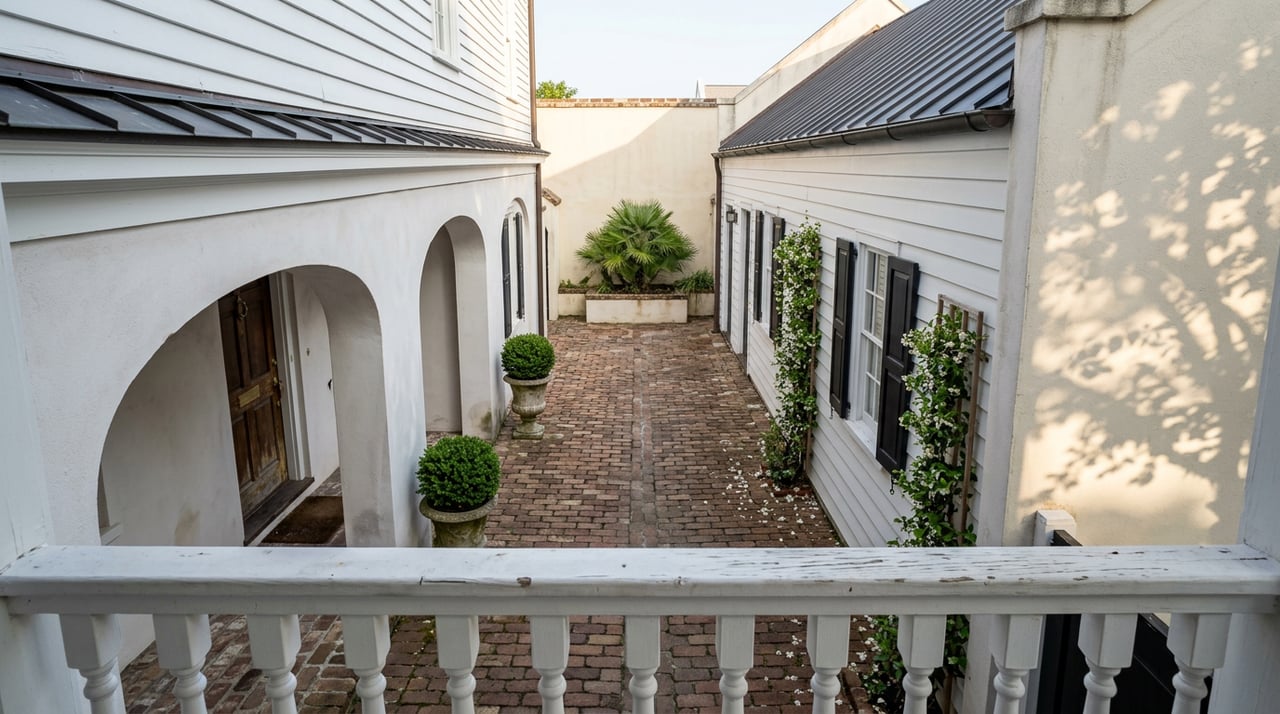
A woman walks her dog past St. Augustine Green on a Sunday morning in early September. Three weeks ago this same patch of grass held two hundred people in beach chairs, a hot dog cart working overtime, and a costumed illusionist pulling scarves out of thin air under string lights. Now it's just grass and shade trees. She keeps walking two blocks to North Barrett Square, where forty vendor tents are already up, a line has formed at the coffee stand, and someone is arguing cheerfully with a farmer about the price of heirloom tomatoes. The green looks like the season ended. Barrett Square looks like nothing happened at all.
That contrast is the whole story of Rosemary Beach right now. The programming built for summer visitors has wrapped. The rhythm built for the people who actually live here hasn't paused for a single Sunday.
What Actually Ended in August
The Wednesday concert series on St. Augustine Green ran weekly from late May through the first week of August, and it was genuinely the season's centerpiece. This year's run included a themed production from Julian and Melody Pittman, built specifically around the Rosemary Beach community, with the kind of full theatrical staging (illusions, fire routines, choreography) that turns a Wednesday into an actual evening out. Face painting from a resident artist ran before the show. DogMan Du's hot dog cart sold out the front rows before the first act started. It was a good run, and it's over for the year.
If your read on Rosemary Beach right now is built on that series, the town looks like it went to sleep. That read is wrong, and the reason it's wrong tells you something about how this place actually functions.
The Rhythm That Was Never Built to Pause
The Wednesday series was a seasonal overlay, added programming for the months when the town fills with families on rental weeks. The 30A Farmers Market at 28 North Barrett Square is the opposite kind of fixture. It runs every Sunday, year round, nine to one, with no summer schedule and no winter break. Forty to fifty vendors set up under the shade trees each week regardless of what month it is: local grass-fed beef, Gulf seafood dips, small-batch preserves, fresh flowers. It has run this way long enough that nobody who actually lives in Rosemary Beach thinks of it as an event. It's closer to a fact about the neighborhood.
That distinction matters if you're trying to read the town's actual calendar instead of its marketing calendar. The concert series drew a crowd because it was scheduled and promoted. The market draws a crowd because it's just what Sunday morning is here. One of those things can end for the season. The other one structurally can't, because it was never seasonal to begin with.
The Restaurants Didn't Get the Memo Either
Barrett Square's restaurant lineup doesn't slow down just because the amphitheater programming does. Gallion's, at 104 North Barrett Square, keeps its full daily rhythm running regardless of month: a family-friendly lunch from eleven to two-thirty, then an adults-only room from three onward through happy hour and into dinner service at five. The wine list alone runs past 150 labels, which is not the kind of program a restaurant builds around three peak summer months and then coasts on the rest of the year.
A few doors down, Havana Beach Bar & Grill inside The Pearl Hotel holds AAA Four Diamond status and runs breakfast, lunch, and dinner daily with weekend brunch, drawing on Hemingway-era Havana for its menu and its room. Pescado's rooftop keeps its own late crowd going on top of the hotel scene below it. None of these rooms are seasonal add-ons. They're the town's actual social infrastructure, and infrastructure doesn't take August off.
Here's what's still running on a normal week in Rosemary Beach right now, with no seasonal gap:
- 30A Farmers Market, North Barrett Square, every Sunday, 9 a.m. to 1 p.m.
- Gallion's brunch, bar, and dinner service, daily
- Havana Beach Bar & Grill breakfast through dinner, daily, with weekend brunch
- Pescado's rooftop bar, nightly
That's the actual weekly spine. Everything else on the calendar gets built on top of it.
Three Fixed Points Still Ahead
The town isn't coasting through a blank stretch until next summer. Three dated fixtures sit on the calendar through January, and none depends on the Wednesday series to draw a crowd.
Late October brings the Monstrous Halloween Bash, put on by the Merchants of Rosemary Beach. Trick-or-treating runs through the town center businesses, with a costume contest, pumpkin decorating, and games that pull families out of their rentals and into Barrett Square for an afternoon. It's a merchant-run event rather than a town-programmed one.
Then comes the date every owner in Rosemary Beach already has circled: Rosemary Beach Uncorked, its fifteenth year, set for Saturday, November 14, 2026, from one to four in the afternoon on Barrett Square. Ten of the town's restaurants each prepare three dishes paired with three wines, guests stroll the cobblestone streets at their own pace, and SIP Stops fill in the gaps between formal tastings. It's the town's largest single food and wine event, and the mechanics of getting a ticket say something about how tightly this community operates. Property owners got first access to tickets in mid-May, and any remaining inventory was scheduled to open to the public a few days later. The event tends to sell out from that owner presale alone.
Two months after that, the wider 30A corridor turns its attention to the 30A Songwriters Festival, running its eighteenth year over Martin Luther King weekend, January 15 through 18, 2027. It's produced by the Cultural Arts Alliance of Walton County and spans more than 30 venues along the highway, drawing songwriters and touring acts to rooms up and down the coast. It's not a Rosemary Beach event specifically, but it's the next entry on the corridor-wide calendar that residents here plan around, and it closes the loop that started with Uncorked in November.
Why the Calendar Never Actually Empties
Put the pieces next to each other and the pattern gets easy to see. The town runs two separate calendars at once. One is built for the family-vacation months, heavy on scheduled programming like the Wednesday concert series, and it has a defined start and end date every year. The other is the standing infrastructure, the Sunday market and the daily restaurant rotation, and it was never built with an off-season in the first place. When the first calendar ends, it looks like the whole town quiets down. What's actually happening is the second calendar, the one that was running the entire time underneath the first one, simply becomes visible again.
That's worth knowing if you're the kind of person who already lives here and wonders whether September through November is a dead stretch worth planning around. It isn't. The market runs. The restaurants run. Halloween and Uncorked both land on the calendar before the holidays even arrive, and the Songwriters Festival picks things back up in January. The only thing that actually stopped was the programming built for people who are here for a week. The programming built for people who are here for good never had a pause button.
If you're weighing a move to Rosemary Beach or thinking about what ownership here actually looks like across a full calendar year, not just the three loudest months of it, Atwater | Henderson can walk you through what a property in this town actually delivers in the shoulder seasons, not just the peak ones. Reach out to receive exclusive listings before they hit the wider market.